
Zombs.io
Game info
Drop into a browser tab, grab a pickaxe, and try not to die before sunrise. That is the elevator pitch for Zombs.io, a multiplayer survival game that distills the genre down to its most addictive essentials: gather resources, build a fortress, and hold it against waves of zombies that grow nastier every single night. The rules are lean enough that anyone can start playing within seconds, yet the survival loop has a habit of keeping you locked in far longer than you planned. Once that first horde crashes against your walls and you barely scrape through, the urge to optimize, rebuild, and push one wave further becomes genuinely hard to resist.
Building, Upgrades, and the Survival Loop
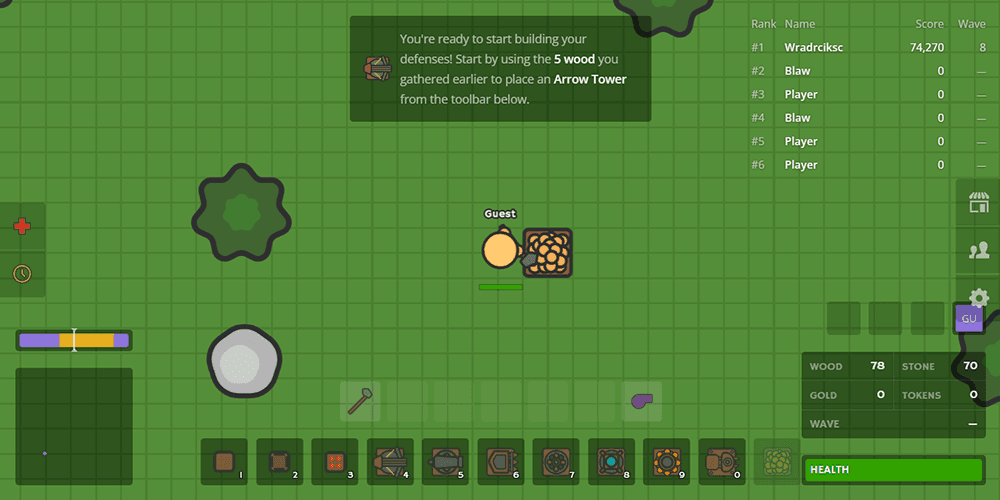
Everything begins with the pickaxe. Smacking trees yields wood; hitting rocks yields stone. These two materials form the backbone of every defensive structure you will place. The real match kicks off the moment you set down your gold stash, which acts as both your home base and your primary upgrade hub. From that point on, nightfall means zombies, and the clock is always ticking.
Gold is the long-term currency that separates a doomed camp from an enduring stronghold. Building gold mines around the stash creates a steady income stream, and that gold feeds back into upgrading the stash itself. A higher-level stash unlocks stronger walls and more powerful towers, which is critical because the zombie waves scale up relentlessly. Neglect your economy and you will hit a ceiling where no amount of frantic clicking can save an under-leveled base.
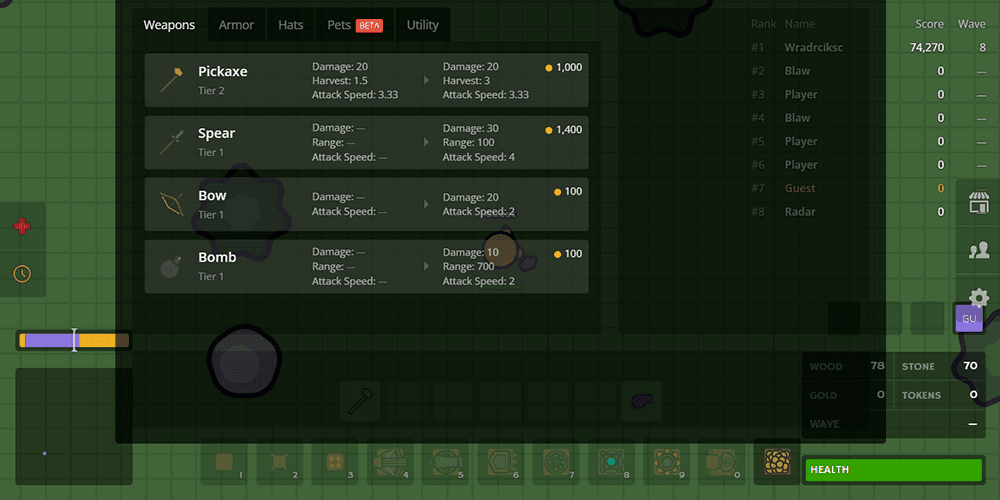
Towers handle the bulk of the fighting, but positioning matters. A cluster of upgraded archer towers behind layered walls can shred early waves with ease, while later nights demand careful placement and resource prioritization. The shop, opened with a quick tap of B, lets you purchase new weapons and upgrade your pickaxe for faster gathering, feeding the cycle of collect, build, and defend even more efficiently.
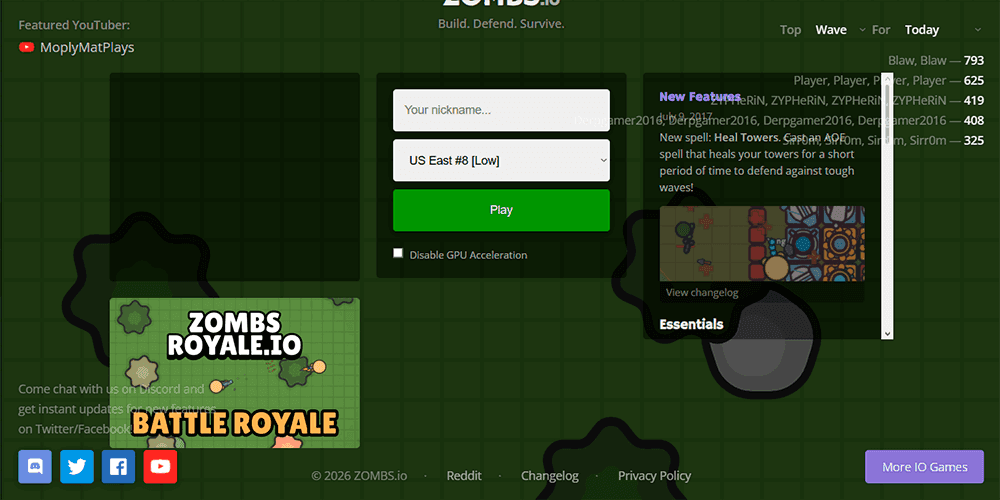
Active abilities add a welcome wrinkle to what could otherwise become a passive tower-defense affair. The Heal Towers spell, for example, casts an area-of-effect heal on your structures, buying precious seconds during the toughest waves when walls are crumbling and towers are sparking. Knowing when to pop that heal versus when to spend gold on a fresh wall segment is the kind of split-second decision that keeps each night tense.
Controls, Strategy, and Multiplayer Appeal
Zombs.io keeps its input scheme refreshingly clean. WASD handles movement, the mouse aims and interacts, and a handful of shortcut keys cover nearly every action you need mid-combat. E for quick upgrade, T for quick sell, F for quick heal, Q to cycle weapons, and Space to toggle auto-attack. The result is a game you can teach someone in under a minute, yet the shortcuts reward muscle memory the longer you play.
Where the game quietly deepens is in base layout strategy. Veterans experiment with concentric ring designs, funnel corridors that force zombies into kill zones, and resource-efficient layouts that maximize gold mine output relative to wall coverage. A sloppy base bleeds resources patching holes every night; a well-planned one practically runs itself through the mid-game waves and frees you up to gather or fight on the front line.
Multiplayer amplifies all of this. Opening the party menu with P lets you team up, and coordinated groups can divide labor — one player farming resources while another reinforces weak points and a third manages upgrades at the stash. Communication is minimal by design, but the shared pressure of a zombie wave bearing down on a collective fortress creates a natural, unspoken cooperation that few browser games manage to replicate.
The low barrier to entry is a huge part of why Zombs.io carved out a loyal audience. No download, no account required, and matches ramp up fast enough that even a ten-minute session delivers a satisfying arc. Yet for players willing to dig deeper, the interplay between economy management, defensive architecture, and real-time combat decisions offers enough tactical meat to justify dozens of hours of experimentation with new base designs and survival strategies.