
OpenFront
Game info
At first glance, OpenFront looks like another lightweight .io game you click through for five minutes and forget. That impression lasts about thirty seconds. What actually greets you once a match starts is a genuine real-time strategy experience built around territorial conquest, economic planning, diplomacy, and large-scale warfare, all running in a browser tab with no download required. OpenFront is open-source, free, and accessible on desktop, tablet, and mobile, yet it plays with a depth and intensity that puts it closer to a traditional RTS than to the casual browser games it superficially resembles. The controls are simple, the learning curve is gentle, but the strategic ceiling is remarkably high.
From Early Expansion to Late-Game Chaos
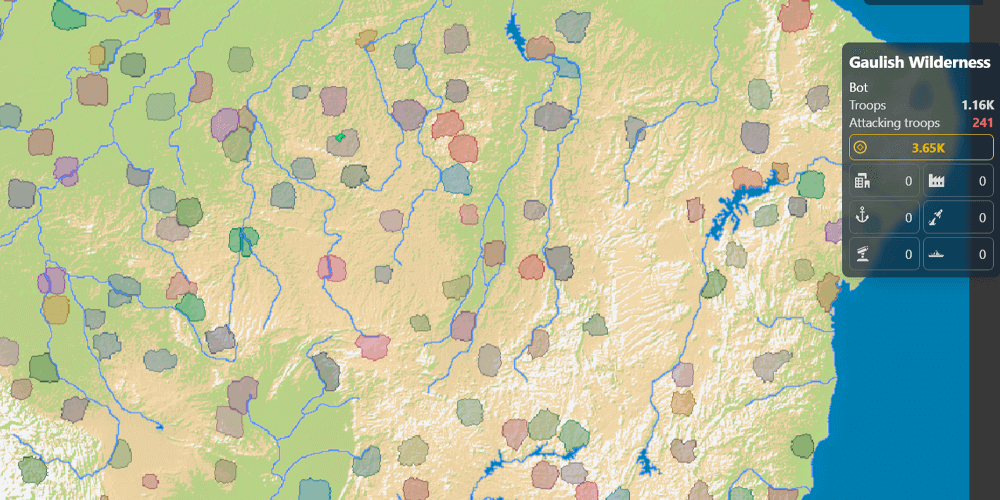
A typical OpenFront match moves through three distinct phases, each with its own rhythm and tension. The opening minutes are a land grab. You pick a spawn point, ideally on open grassland away from other players, and race to claim neutral territory while eliminating AI bots through encirclement or direct assault. Speed matters here, but greed is punished. Expand too aggressively and your borders stretch thin, inviting neighbors to slice through and split your nation in half.
Once borders start touching, the mid-game shifts into a careful balancing act. Population management becomes critical: you want to hover around 40 to 50 percent of your maximum population for the fastest growth rate, meaning you can never just throw everything into an attack and hope for the best. Gold income from ports and trade routes funds your first cities, which each add 25,000 to your population cap, and defense posts that multiply attacker casualties at chokepoints. Every building decision is a trade-off between scaling your economy and hardening your frontline.
The late game is where OpenFront truly comes alive. Nuclear weapons enter the picture: atom bombs for precision strikes, hydrogen bombs for area denial, and the devastating MIRV that can flatten an entire nation. The counterplay is just as layered. SAM launchers intercept incoming missiles, so smart players exhaust enemy defenses with cheaper nukes before launching the big one. Naval supremacy through warships and captured trade routes can fund this arms race, turning whoever controls the seas into an economic juggernaut. Alliances, which last ten minutes and carry a permanent 20 percent defense debuff if betrayed, add a diplomatic knife-edge to every late-game decision. The result is matches that routinely build toward chaotic, decisive final acts where a single well-timed betrayal or nuclear strike reshapes the entire map.
What makes all of this work is how tightly the systems connect. Expansion feeds your economy, your economy funds buildings, buildings support stronger military pushes, and those pushes create diplomatic leverage. Nothing exists in isolation.
What Makes OpenFront Stand Out
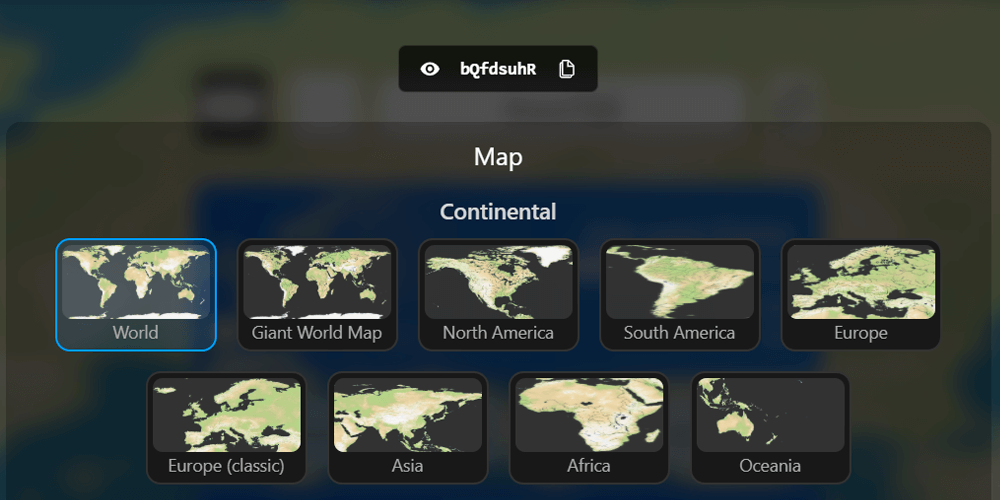
The scale alone is impressive. Matches can host up to 80 players on a single map based on real-world geography, which means every session plays out differently depending on spawn positions, terrain, and the unpredictable behavior of dozens of human opponents. The alliance system turns each game into a shifting web of cooperation and suspicion, where the player flying under the radar with a strong port network can be more dangerous than the obvious military leader everyone is trying to contain.
OpenFront's biggest strengths are hard to argue with. It costs nothing, runs on virtually any device with a browser, and its open-source development on GitHub means the community actively shapes its future. Replayability is excellent thanks to the variety of maps, modes including ranked competitive and private lobbies, and the sheer number of strategic paths available in any given match.
That said, the game is still in alpha, and it shows. The visuals are functional rather than polished, conveying information clearly but offering little aesthetic pleasure. With so many players on one map, matches can tip from strategic tension into outright chaos, especially when multiple nuclear exchanges happen simultaneously. Balance across different map layouts and spawn positions can feel uneven, and newer players may find themselves eliminated before they fully understand what went wrong.
None of that undermines the core experience. OpenFront feels like a game built by people who care about strategy depth first and surface polish second, and for the right audience, that priority is exactly correct. It is ambitious, community-driven, and already delivering the kind of interconnected, high-stakes RTS gameplay that keeps you queueing up for one more match long after you planned to stop.