
MiniGiants.io
Game info
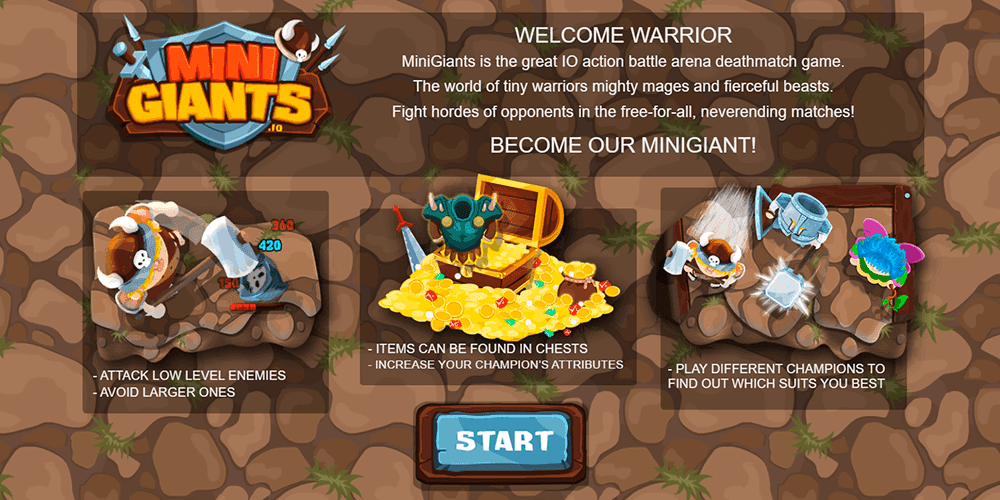
MiniGiants.io belongs to that particular breed of browser game that hooks you before you even realize what happened. Developed by Night Steed Games, it is a top-down multiplayer deathmatch that merges the instant accessibility of the .io genre with a surprisingly robust layer of RPG progression. The pitch is simple and timeless: you start as a tiny, vulnerable fighter in a crowded arena, gather glowing orbs to grow, dodge anyone bigger than you, and gradually transform into a screen-filling menace that sends smaller players scrambling. What makes it worth talking about is how well it marries that chaotic, pick-up-and-play energy with systems that actually reward you for coming back. The growth loop is the star here, and most of what follows examines whether the game delivers on its promise of satisfying escalation.
Combat Flow and Moment-to-Moment Strategy
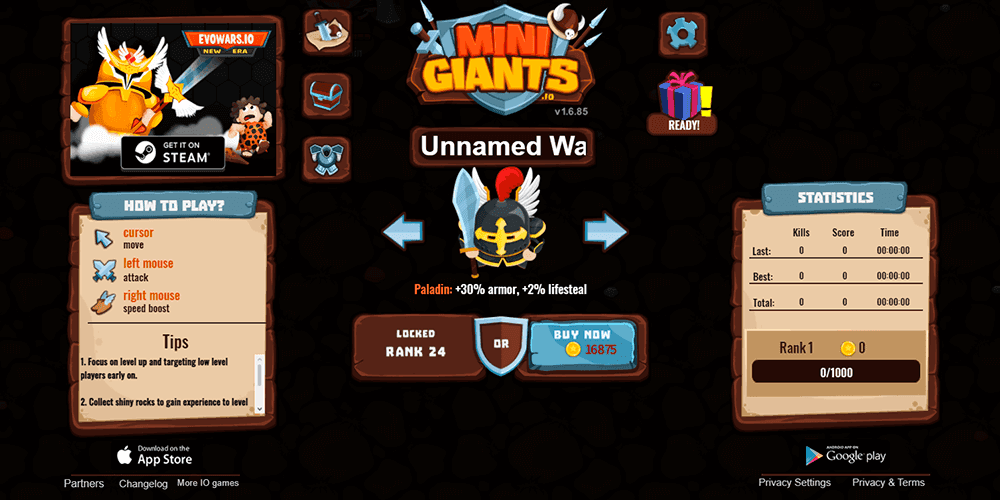
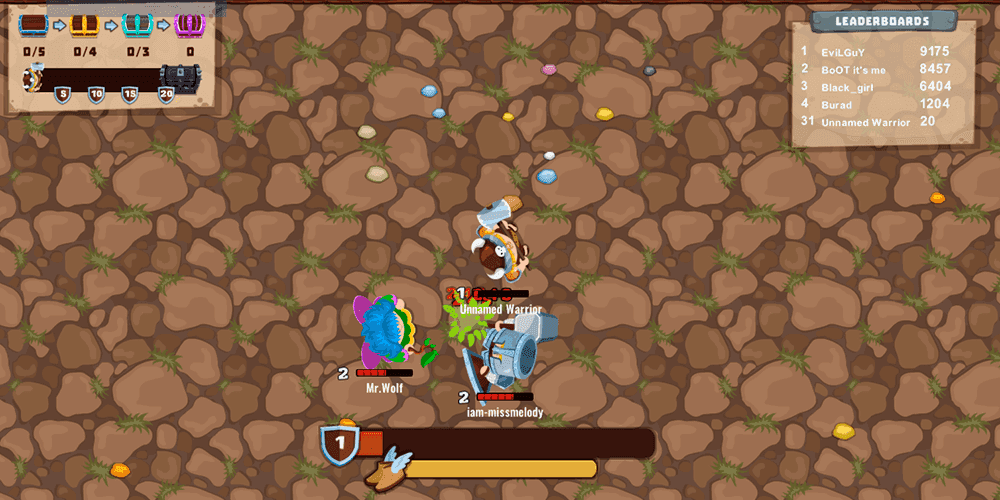
Matches in MiniGiants.io follow a rhythm that feels natural within seconds. Your character trails the cursor, left click swings your weapon, and right click triggers a limited speed boost that recharges over time. That is the entire control scheme, and it is plenty. Early rounds are all about farming: you weave through the arena scooping up colorful experience stones, steering well clear of anyone who has already stacked a few levels. The tension at this stage comes from reading the battlefield. A larger player charging in your direction demands an immediate boost to safety, while a wounded opponent limping away from a fight they barely survived presents a tempting opportunity for a quick snipe.
As you level up, your character physically grows in size and power, and the dynamic shifts. Mid-match you start picking fights more confidently, circling opponents, timing your swings, and using the speed boost to close gaps or bail out of bad trades. Positioning matters far more than mindless clicking. Swinging too early leaves you exposed; chasing too deep into a cluster of enemies gets you swarmed. The game rewards patience and opportunism over raw aggression. Visually the whole thing is easy to parse thanks to a clean top-down camera and cheerful, cartoonish art. Watching your warrior balloon from a pebble-sized scrapper into a hulking giant never stops feeling good, and the readable presentation ensures you always know where the threats are.
Classes, Loot, and Progression Systems
Where MiniGiants.io pulls ahead of many .io competitors is in the systems layered on top of the core loop. The class roster starts with the Barbarian, a stamina-heavy bruiser that is ideal for new players learning to farm and evade. As your account levels up across sessions you unlock additional classes at regular intervals: Tank at level three with its hefty armor bonus, Fairy with a split of stamina and health, the damage-focused Mage at fifteen, the life-stealing Beast at twenty-one, and several more up to Angel at level thirty. Each class shifts your stats and playstyle enough to make the unlock feel meaningful. Experimenting with a Necromancer's balanced stat spread versus an Amazon's offensive lean gives you a reason to keep grinding long after the novelty of a single match fades.
Loot adds another motivating layer. Defeated enemies sometimes drop chests ranging from common Wooden containers to the coveted Divine chest, which carries a serious chance of yielding Legendary or Mythic equipment. Gear slots cover weapons, armor, helmets, gloves, rings, and necklaces, and every piece nudges your base stats upward. Gold found inside those same chests funds upgrades, so spending wisely on higher-quality items matters. You can even fuse lower-tier chests into better ones, turning a pile of Wooden drops into a Gold chest and eventually working your way up to Crystal or Magic. On top of all that, the arena system gates competition by experience: Novice, Advanced, and Master tiers each require reaching level twenty in the previous bracket, keeping matchups reasonably fair and giving long-term players fresh competition to chase.