
Hole.io
Game info
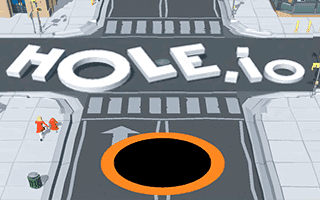
There is something immediately irresistible about controlling a hole in the ground that swallows an entire city. Hole.io, developed by Voodoo, drops you into a miniature urban landscape and tasks you with consuming everything in sight — park benches, pedestrians, cars, trees, and eventually entire buildings. The controls are dead simple: swipe to steer your hole around the map, and anything that fits falls in. Rounds last just two minutes, which is exactly long enough to create a ferocious "one more match" pull that keeps you tapping the replay button. It is the quintessential mobile time-killer, the kind of game you open on a bus ride and look up from twenty minutes later. But once the initial novelty of devouring a skyscraper settles, cracks in the pavement start to show.
Fast Growth, Tight Rounds, and Modes That Don't All Work
The core loop is genuinely satisfying in short bursts. You begin as a tiny opening barely big enough to gulp down a fire hydrant, and within a minute you can be swallowing whole city blocks. There is a light but real layer of strategy here: picking a route through dense clusters of small objects so you grow quickly, prioritizing targets by size, and steering clear of larger opponents who can consume your hole outright. That early-game scramble for resources before pivoting to attack rivals gives each round a miniature arc that feels rewarding.
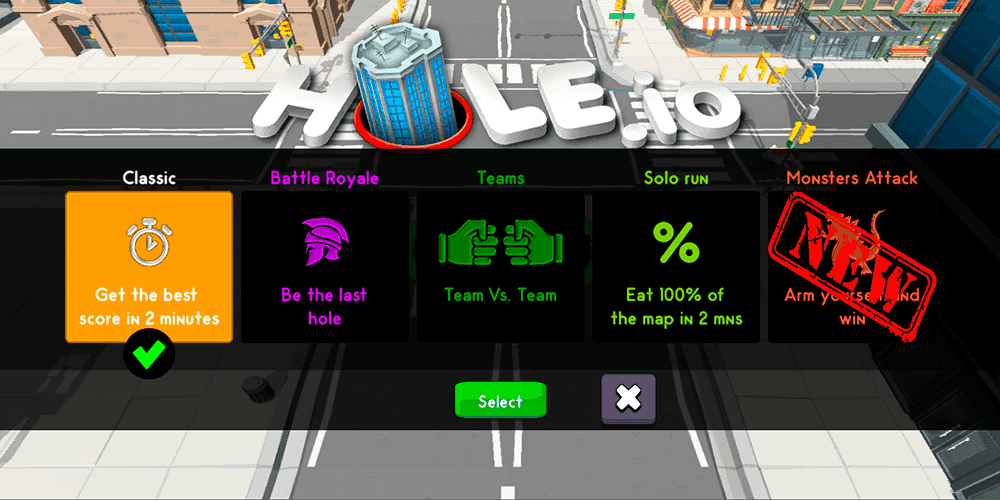
Hole.io offers several modes to play with. Classic pits you against opponents in a race for the highest score. Battle shifts the goal to being the last hole standing. Solo lets you try to devour the entire city on your own, a surprisingly zen exercise. Some versions also support local or Bluetooth multiplayer for playing with friends. The format works best when it leans into quick arcade chaos — Classic and Solo deliver exactly that.
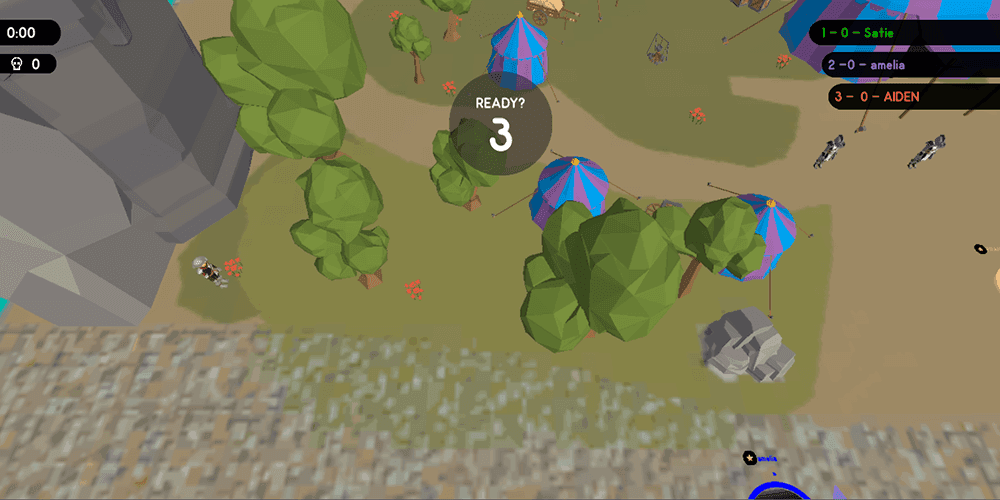
Where the design wobbles is in the details. Spawn location matters far too much; starting in an empty corner of the map means burning precious seconds just reaching something edible, while a rival who spawns in a target-rich zone surges ahead. Battle mode amplifies this problem, since stronger opponents can close in on you before you have any chance to grow, making rounds feel decided before they begin. And about those opponents — despite the multiplayer framing, the competition often feels suspiciously like bots rather than real human players, which strips away much of the competitive tension the game promises.
Colorful Presentation, Thin Variety, and Aggressive Monetization
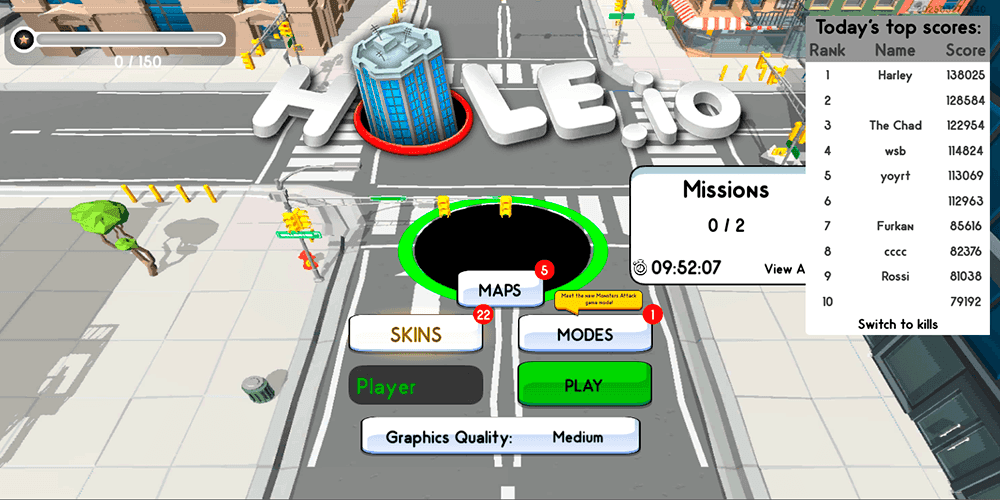
Visually, Hole.io does its job well. The bright, flat, colorful art style makes every object on the map instantly readable, and the miniature city environment is charming in a toy-box kind of way. The interface is so intuitive that anyone can understand it within seconds. And the destruction fantasy — watching buildings tip and tumble into your ever-expanding void — remains oddly satisfying no matter how many times you see it. That visual feedback is doing most of the heavy lifting, because the audio side is minimal to the point of being forgettable. There is no memorable soundtrack or meaningful sound design to speak of, so the eyes carry the entire experience.
The bigger problems surface over time. Map variety is extremely limited, and the repetition sets in fast when you are racing through the same cityscape round after round. Tall buildings occasionally obscure your view, making it difficult to spot an incoming rival until it is too late, which turns survival into a coin flip. Performance also dips noticeably as your hole grows larger; lag becomes more prominent the longer you play, and on older devices the experience can stutter at the worst possible moments.
Then there is the monetization, which is aggressive even by free-to-play standards. A full-screen ad plays after virtually every round, breaking the rhythm of the very "one more match" loop the game depends on. You can pay to remove ads, but the asking price feels steep for a game with this little content. The whole package ends up feeling more disposable than polished — easy to pick up, easy to enjoy for a few sessions, and just as easy to uninstall once the thrill of swallowing a skyscraper stops being novel.