
ev.io

Game info
Opening / Lead-In
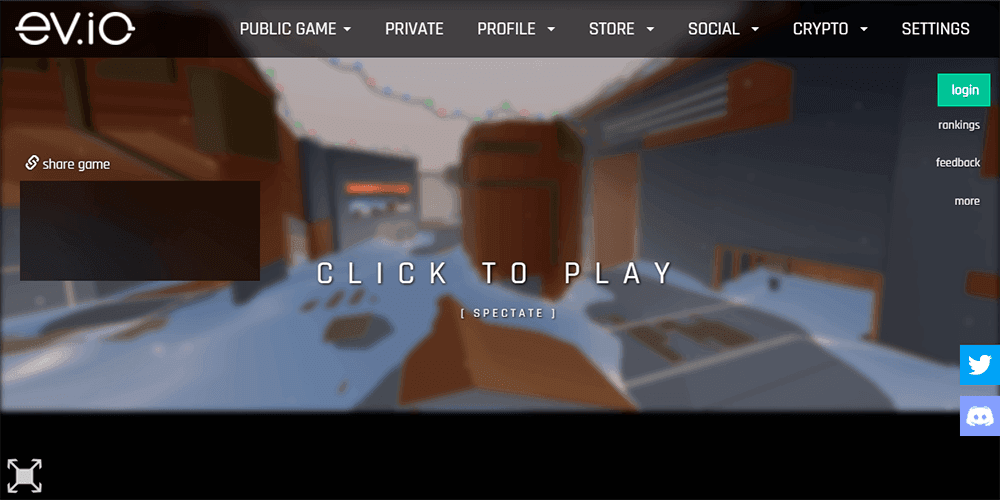
EV.IO is a lightweight, browser-based first-person shooter that channels the spirit of old-school arena classics like Quake and Unreal Tournament while layering in modern mobility tools such as teleportation, multi-jump traversal, and ability-driven movement. It belongs to a lineage of games that embraced advanced movement after mainstream shooters largely moved away from it. Where titles like Splitgate briefly captured that audience with portal-based mechanics, EV.IO pushes further by making the entire experience accessible through a web browser on virtually any device, including low-end PCs, Macs, and even mobile hardware running Android or iOS.
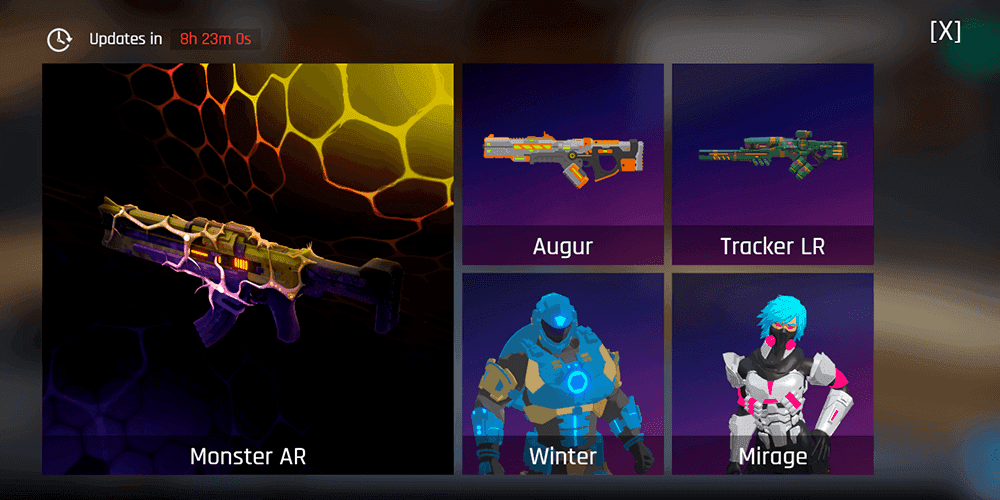
The game's biggest strength is not its presentation but how rapidly it funnels players into fast, readable, competitive matches with almost no friction. Visit the site, click play, and within seconds you are loaded into a map and fighting. There is no installer, no lengthy patch, no mandatory tutorial standing between you and the action. EV.IO does include a blockchain layer built on the Solana network, with NFT skins and a play-to-earn system that lets players convert in-game currency to SOL. That side of the game is entirely optional, however, and this review judges EV.IO primarily as a shooter.
Movement, Gunplay, and Loadout Flexibility
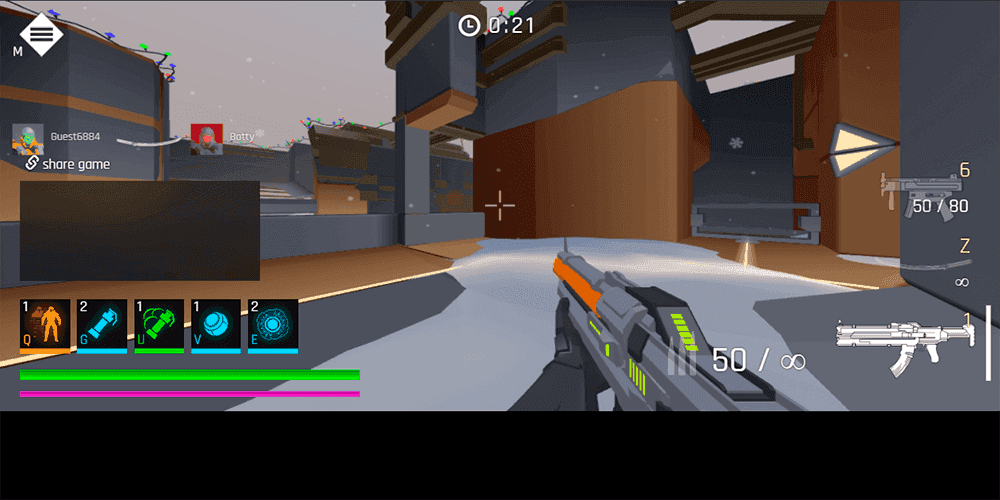
Mobility is the beating heart of EV.IO and the single feature that elevates it above most browser-based competitors. Matches move at a blistering pace thanks to teleportation abilities, double and triple jumps, and rapid ability-based traversal that opens up genuine verticality across every map. Fights do not stay on one plane for long. Players blink behind cover, leap over incoming fire, and launch surprise attacks from above. The result is a movement vocabulary that rewards creativity and keeps each engagement unpredictable, recalling the advanced-movement niche that games like Call of Duty briefly explored before pulling back.
The weapon sandbox reinforces that variety. Loadouts can include assault rifles, sniper rifles, shotguns, an SMG called the Sweeper, a revolver-style hand cannon, a laser rifle, a burst rifle, swords, RPGs, grenades, and mines. Whether you prefer aggressive close-quarters rushes with a shotgun and sword or disciplined long-range picks with a sniper, there is a viable path. Equipment and ability slots deepen the options further. You might run multiple teleport charges for maximum evasiveness, pair a triple jump with mines for area denial, or combine a double jump with a smoke grenade for stealthy flanks. The loadout system is where much of the player expression lives, and experimenting with combinations keeps the game feeling fresh across sessions.
Controls and core shooting feel responsive enough for a browser title, and distinct audio cues for each weapon help with situational awareness during chaotic firefights. That said, recurring frustrations chip away at the experience. Hit registration can feel inconsistent, particularly on distant servers where ping spikes make shots seem to vanish. Some equipment and abilities are bound to awkward keys, and remapping options appear limited. Sensitivity settings can also feel finicky, occasionally requiring manual tweaking outside the standard menu sliders.
Modes, Progression, and the Limits of the Package
EV.IO's mode roster has expanded considerably. Classic free-for-all and team deathmatch remain the staples, but the rotation now includes Sniper Shotgun, a deathmatch variant restricted to sniper rifles and shotguns that forces players to sharpen both precision and close-quarters instincts. Infection introduces a survival-against-the-horde dynamic with infected players hunting the remaining survivors. Battle Royale offers a last-player-standing format, while Survival shifts to a PvE wave-defense structure reminiscent of Call of Duty's Zombies mode. Together these modes inject welcome variety even when the core shooting loop stays mechanically simple.
Progression extends beyond raw kills. Players can create accounts to unlock customization, participate in competitive play and clan wars, tackle daily quests and events, and optionally engage with the NFT and SOL earning system. The play-to-earn layer provides additional motivation for players who want the web3 experience, with E tokens earned through in-game performance convertible to Solana cryptocurrency, but it sits cleanly to the side and never intrudes on the core shooter experience.
EV.IO's trade-offs are real, though, and worth acknowledging. Graphics are modest by any standard, and maps, while functionally varied, can feel repetitive and visually sparse over time. The player base is not large enough to consistently fill lobbies in every mode, meaning less popular playlists often supplement with bots. Server instability still surfaces during peak moments, and occasional errors mid-match remain a source of frustration. These are the costs of a game built for speed and accessibility rather than polish, and for players who value immediacy and fast-paced competition above all else, they may be costs worth paying.