
Bonk.io

Game info
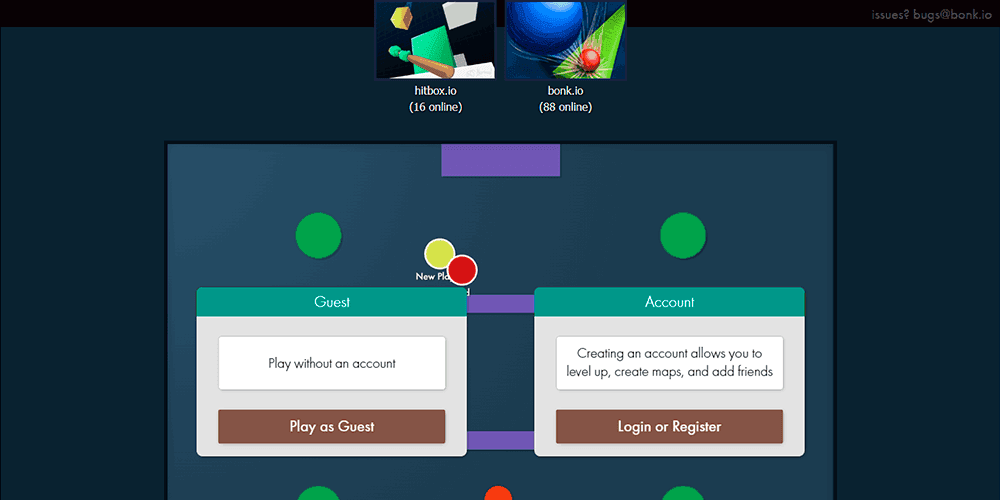
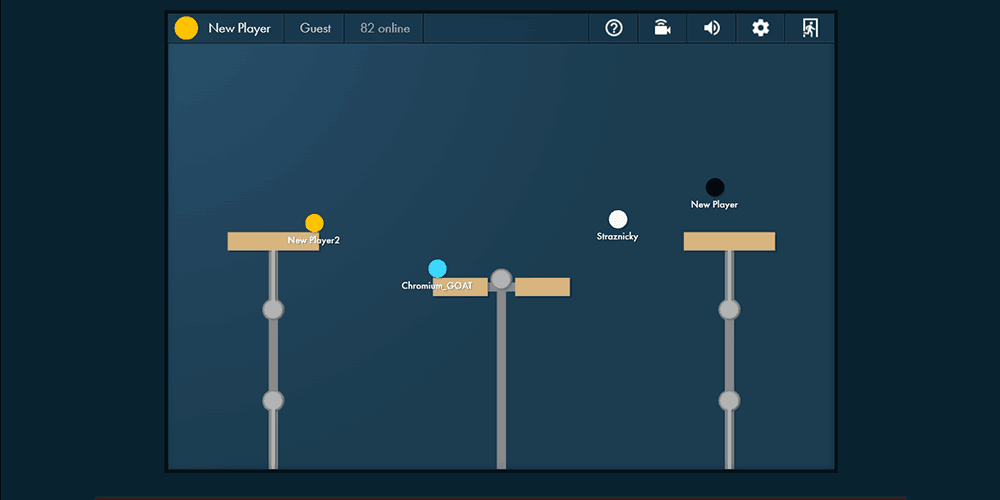
Bonk.io is one of those browser games that sounds almost too simple to be interesting. Created by London-based developer Chaz and originally released in April 2016, it drops players into small arenas as bouncy circles and asks them to do one thing: knock everyone else off the map. That's it. No weapons, no power-ups, no complicated move lists. Yet somehow, after nearly a decade and a full rebuild from Flash to HTML5 in January 2021, Bonk.io still draws players into lobbies for round after round of chaotic, physics-driven competition. The reason is straightforward. Beneath the minimalist surface sits a physics system that rewards timing, spacing, and split-second decision-making in ways that keep both newcomers and experienced players engaged.
Physics, Controls, and the Skill Ceiling
Movement in Bonk.io relies on the arrow keys, and the single most important mechanic lives on the X key. Holding it increases your ball's mass, which means harder collisions and greater resistance to being pushed, but it also kills your agility. That one toggle creates the game's central risk-reward loop. Stay light and you can dodge, reposition, and recover from bad angles quickly. Go heavy and you become a wrecking ball that can barely steer. The best players treat the switch like a fighting game input: stay light on approach, convert to heavy right before contact, then release immediately to regain mobility. Momentum, angle of impact, and map position all factor into whether a collision sends your opponent flying or leaves you tumbling off a ledge instead. Brute force rarely wins against someone who understands spacing. A well-timed sidestep lets a charging player sail past, and the punish that follows is almost always easier than the head-on trade. Center control matters too, giving you recovery room on both sides while the edges punish overcommitment instantly.
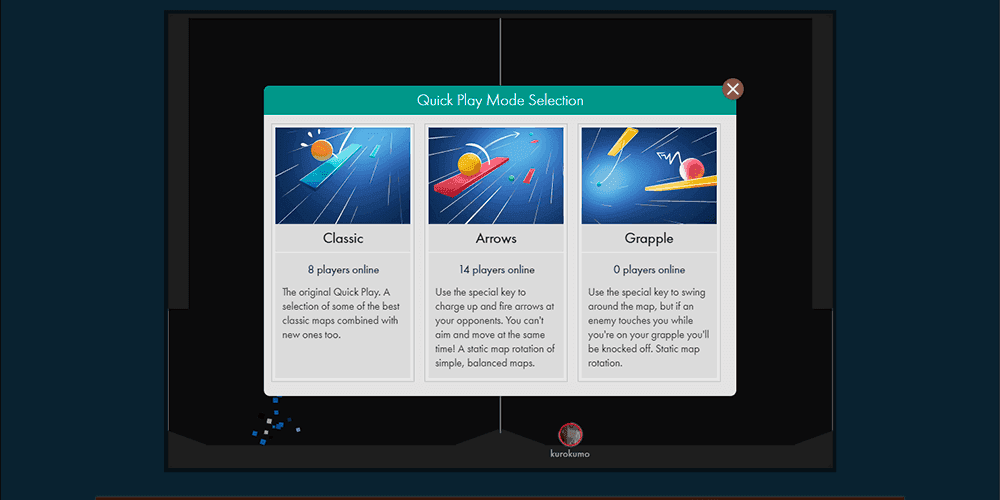
Matches support up to eight players, and rounds are short enough that elimination never stings for long. The constant cycle of quick deaths and immediate rematches creates an almost arcade-like rhythm. One round might be a careful two-player duel on a flat platform; the next is an eight-player free-for-all on a map full of moving obstacles and narrow pinch points. Map layout fundamentally changes the flow of every fight, demanding that players read the terrain in the opening seconds rather than relying on a single strategy. Bonk.io takes seconds to understand but demands real practice to master. Learning when to commit weight, how to recover from a bad bounce, and where to position yourself near the edge separates casual fun from genuinely competitive play.
Custom Maps, Community Content, and Replay Value
What keeps Bonk.io alive years after launch is not just its core mechanic but everything the community has built around it. The game ships with a full map editor that lets players design arenas using platforms, physics objects, and custom rules, then share those creations for anyone to play. The result is a library of hundreds upon hundreds of community-made maps ranging from classic knockout stages to puzzle levels, racing tracks, and team-based arenas. Players can hop into public rooms to face strangers, set up private lobbies with friends, or browse community maps directly from the game's interface and through forums and Discord servers. Customization extends to your character as well. Skins, colors, and personal logos let players stand out visually, while a ranking system and global leaderboards give competitive types something to chase beyond the next win.
The game's long-term appeal rests on a strong foundation: free access with zero pay-to-win mechanics, endless variety from user-generated content, and a skill curve that rewards improvement without hiding it behind stat trees or unlock grinds. That said, the experience is not without rough spots. Community maps vary wildly in quality, and some custom rooms with heavy physics interactions can tax browser performance. Early matches can feel like pure chaos for newcomers who get launched before they understand the weight mechanic. And while Bonk.io technically runs on mobile browsers, the keyboard-first controls make desktop the clearly superior way to play. Touch input simply cannot replicate the precision that arrow keys and a well-timed X press provide. None of these issues undermine what Bonk.io does well, but they are worth knowing before diving in.